

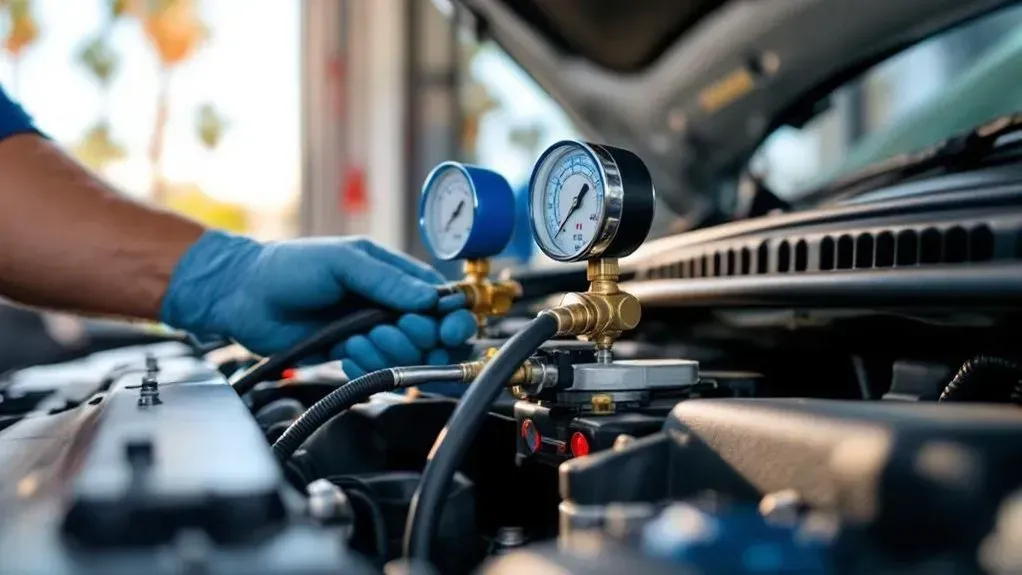

How to Prepare Your Car’s Air Conditioning for Summer in San Diego County


August 21, 2025

How to Prepare Your Car’s Air Conditioning for Summer in San Diego County

Start preparing your car’s AC for San Diego’s summer heat by testing the system now while temperatures are manageable—run it on maximum cooling and expect cold air within minutes. Replace your cabin air filter every 12,000-15,000 miles, as San Diego’s dusty conditions can clog it faster. Schedule a professional refrigerant inspection to check levels and detect leaks. Clean your condenser monthly with gentle water rinses. Following these essential steps will help you discover additional maintenance strategies that guarantee reliable cooling all season long.

Start preparing your car’s AC for San Diego’s summer heat by testing the system now while temperatures are manageable—run it on maximum cooling and expect cold air within minutes. Replace your cabin air filter every 12,000-15,000 miles, as San Diego’s dusty conditions can clog it faster. Schedule a professional refrigerant inspection to check levels and detect leaks. Clean your condenser monthly with gentle water rinses. Following these essential steps will help you discover additional maintenance strategies that guarantee reliable cooling all season long.

Key Takeaways

  • Test your AC system early by running it on maximum cooling to identify warm air, weak airflow, or unusual sounds.
  • Replace the cabin air filter every 12,000-15,000 miles, or more frequently in dusty San Diego conditions.
  • Schedule a professional refrigerant inspection to check levels, test pressure, and identify potential leaks before summer heat.
  • Clean the condenser monthly with water and use compressed air on radiator screens to maintain cooling efficiency.
  • Monitor AC temperature output at vents, which should produce air between 35-45°F when functioning properly.

Check Your AC System's Current Performance Before Peak Season

Technician adjusting knob on dashboard (AI-Generated) | Euro Auto Tech & Smog

Why wait until the first scorching day of summer to discover your car’s air conditioning isn’t working properly?


Test your AC system now while temperatures are still manageable. Start your engine and turn the AC to maximum cooling with the fan on high. Feel the air coming from the vents—it should blow cold within minutes.


If you notice warm air, weak airflow, or unusual sounds, don’t ignore these warning signs. Check your cabin air filter for dirt and debris that restricts airflow.


Address issues early to avoid expensive emergency repairs during San Diego’s hottest months.

Replace Your Cabin Air Filter for Optimal Airflow

One of the most overlooked maintenance tasks that directly impacts your AC’s performance is replacing the cabin air filter. This filter removes dust, pollen, and debris from air entering your vehicle’s interior.


When it’s clogged, your AC system works harder to push air through, reducing efficiency and cooling power.


You’ll typically find the cabin air filter behind your glove compartment or under the dashboard. Most manufacturers recommend replacement every 12,000-15,000 miles, but San Diego’s dusty conditions may require more frequent changes.


A clean filter guarantees maximum airflowimproves air quality, and helps your AC cool effectively during summer heat.

Schedule Professional Refrigerant Level Inspection and Service

Technician adjusting knobs to test air conditioning unit of vehicle (AI-Generated) | Euro Auto Tech & Smog

While checking refrigerant levels might seem straightforward, it requires specialized equipment and expertise that most car owners don’t possess.


Professional technicians can accurately diagnose refrigerant issues and guarantee your system operates efficiently throughout San Diego’s hot summers.


A qualified technician will:

  • Test refrigerant pressure using specialized gauges and manifolds
  • Check for leaks in hoses, connections, and seals
  • Evacuate old refrigerant and replace it with the correct type
  • Add UV dye to help identify future leaks
  • Verify proper system operation and cooling performance


Don’t risk damaging your AC system with DIY attempts.


Schedule professional auto air conditioning service before summer arrives.

Clean Your Vehicle's Condenser and External Components

Your car’s condenser sits directly behind the front grille, where it constantly collects dirt, debris, leaves, and road grime that can greatly reduce your AC system’s cooling efficiency. You’ll need to clean this component regularly to maintain peak performance.

Component Cleaning Method Frequency
Condenser fins Gentle water rinse Monthly
Front grille Soap and brush Bi-weekly
Radiator screen Compressed air Monthly
Cooling fans Soft cloth wipe Quarterly
Drain tubes Wire snake clear Seasonally

Use low water pressure when rinsing the condenser to avoid bending delicate aluminum fins, which restrict airflow.

Test Temperature Output and Address Warning Signs Early

Pollen build up on air conditioning fan inside vehicle (AI-Generated) | Euro Auto Tech & Smog

After cleaning your condenser and external components, you’ll want to test your AC system’s actual performance before hot weather arrives.


Start your engine and let it reach operating temperature, then turn on the AC at maximum settings. Check the dashboard vents with a thermometer – properly functioning systems should produce air between 35-45°F.


Watch for these warning signs:

  • Weak airflow from vents
  • Strange odors or musty smells
  • Unusual noises when AC operates
  • Inconsistent cooling between different vents
  • AC takes excessive time to cool cabin


Address issues immediately to avoid costly summer repairs.

Frequently Asked Questions

How Often Should I Run My AC During Winter Months?

You should run your AC at least once a week during winter months, even if you don’t need cooling. This keeps the system’s components lubricated and prevents seals from drying out.

Run it for about 10-15 minutes to circulate the refrigerant and oil throughout the system.

Don’t forget to also use the defrost setting regularly, as it automatically engages the AC compressor, helping maintain your system’s health.


Can I Use My Car's AC to Reduce Humidity Inside?

Yes, you can definitely use your car’s AC to reduce humidity inside your vehicle.

Your air conditioning system naturally removes moisture from the air as it cools, acting like a dehumidifier. When you run the AC, it pulls humid air over cold evaporator coils, causing water vapor to condense and drain away.

This process effectively lowers the humidity level in your car’s cabin, making it more comfortable and preventing foggy windows during humid conditions.


Does Using AC Significantly Impact My Vehicle's Fuel Economy?

Yes, you’ll notice your fuel economy drops when you’re running your AC.

Your engine works harder to power the compressor, which can reduce fuel efficiency by 10-25% depending on your driving conditions.

However, at highway speeds above 50 mph, you’ll actually save more fuel using AC than driving with windows down due to increased aerodynamic drag.

City driving with AC typically consumes more fuel than highway use.


What's the Difference Between Recirculation and Fresh Air Modes?

Recirculation mode closes outside vents and cycles air that’s already inside your car.

You’ll cool down faster since your AC doesn’t work as hard to chill already-cooled interior air.

Fresh air mode pulls outside air through your vents, providing ventilation but making your AC work harder.

Use recirculation for quick cooling, then switch to fresh air occasionally to prevent staleness and guarantee you’re getting oxygen circulation inside your vehicle.


Should I Leave Windows Cracked When Using AC in Parking?

You shouldn’t leave windows cracked when using AC while parked.

This creates an inefficient cycle where your air conditioning works harder to cool air that’s constantly mixing with hot outside air. You’ll waste fuel and strain your AC system unnecessarily.

Instead, run the AC with windows fully closed for a few minutes to cool the interior, then turn off the engine.

If you’re staying in the vehicle, keep windows up for maximum cooling efficiency.

Technician adjusting knob on engine of vehicle (AI-Generated) | Euro Auto Tech & Smog
February 26, 2026
Maintain your BMW's performance with essential maintenance tips. From regular inspections to fluid checks, ensure your car runs smoothly for years to come.

Blue BMW car parked inside of garage (AI-Generated) | Euro Auto Tech & Smog
January 16, 2026
Keep your BMW in peak condition with our top servicing tips. Extend longevity and enhance performance with essential maintenance strategies for your vehicle.
Cold air from the air conditioning dashboard of the car (AI-Generated) | Euro Auto Tech & Smog
December 15, 2025
5 Key Warning Signs Your Car’s Air Conditioning or Heating System Needs Service
Up close to rain drops outside of black vehicle (AI-Generated) | Euro Auto Tech & Smog
November 27, 2025
This critical calibration process prevents your ADAS from dangerously malfunctioning—but most drivers don't realize when their systems drift out of alignment.
Car inside garage on lift with technician performing diagnostic (AI-Generated) | Euro Auto Tech & Smog
August 21, 2025
Discover how to find reliable engine diagnostic services in San Diego County for $100-150 without falling victim to costly scams.
Technician taking out dirty air filter (AI-Generated) | Euro Auto Tech & Smog
July 22, 2025
Unlock the secret strategies that guarantee your vehicle passes smog inspection on the first attempt without costly repairs or retests.
Oil being poured into car | Euro Auto Tech & Smog
July 22, 2025
Here's how to check your oil level in minutes—but what that dark, mysterious residue on your dipstick reveals might surprise you.
Two cars in garage, one car on lift and one car with the hood up (AI-Generated) | Euro Auto Tech & Smog
June 24, 2025
Imagine preventing thousands in repair costs with simple inspections that catch expensive problems before they become financial disasters.
Technician with magnifying glass examining part underneath vehicle (AI-Generated) | Euro Auto Tech & Smog
June 24, 2025
Identify critical transmission warning signs like grinding noises, burning smells, and gear slipping before costly repairs become complete system failure