

Top 10 Tips to Pass Your Smog Inspection the First Time
July 22, 2025
To pass your smog inspection on the first try, warm up your engine for 20 minutes before testing and make sure your check engine light is off. Schedule a pre-inspection tune-up 1-2 weeks in advance, which includes oil changes and spark plug replacements. Use premium gasoline and consider using fuel system cleaners; then, run your vehicle for 100-200 miles afterward. Schedule testing during mild weather with a warm but not overheated engine, and ensure all documentation is current and readily accessible for optimal results.
Key Takeaways
- Warm up your vehicle by driving for at least 20 minutes before testing to ensure emission control systems function correctly.
- Complete a pre-inspection tune-up 1-2 weeks before the scheduled inspection, which includes oil changes, spark plug replacements, and PCV valve checks.
- Use premium gasoline and consider using fuel system cleaners. Drive 100-200 miles afterward to circulate the additives throughout the system.
- Ensure your check engine light is off and repair any visible exhaust system damage, such as holes or cracks.
- Schedule testing during mild weather with a warm but not overheated engine, avoiding appointments immediately after highway trips.
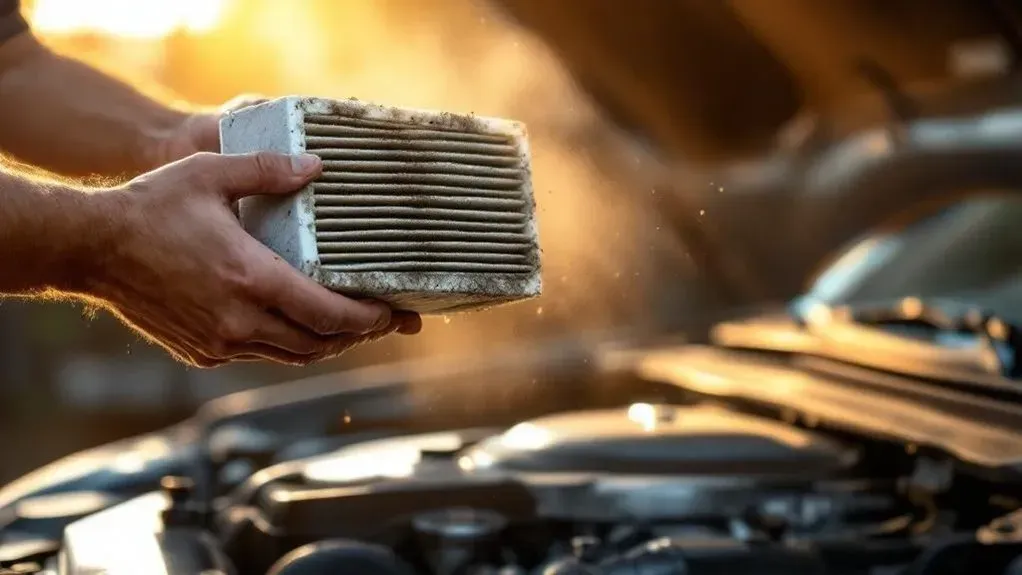
Check and Replace Your Air Filter Before Testing

While a dirty air filter won’t directly cause you to fail a smog test, it can greatly impact your vehicle’s performance and emissions output.
A clogged filter restricts airflow to your engine, forcing it to work harder and burn fuel less efficiently. This creates higher emissions levels that could push you over acceptable limits.
Check your air filter’s condition before testing. If it’s darkened, clogged with debris, or hasn’t been replaced recently, swap it for a new one.
This simple maintenance step costs under $20 but can greatly improve your chances of passing by optimizing your engine’s air-to-fuel ratio.
Ensure Your Check Engine Light Is Off
If your check engine light is on, you’ll automatically fail your smog inspection before any emissions testing begins. The light indicates your vehicle’s computer detected a malfunction that could affect emissions performance.
You must diagnose and fix the underlying problem first. Common causes include faulty oxygen sensors, catalytic converter issues, or loose gas caps.
Visit a qualified mechanic to read diagnostic codes and identify the specific problem. Don’t ignore the light or disconnect the battery hoping it’ll reset – inspectors check for recent code clearing.
Address the root cause, guarantee repairs are complete, and verify the light stays off before scheduling your inspection.
Drive Your Vehicle for at Least 20 Minutes Prior to Testing

After confirming your check engine light stays off, you’ll need to properly warm up your vehicle before heading to the inspection station. Your car’s emission control systems operate most effectively when the engine reaches ideal temperature. Drive continuously for at least 20 minutes at highway speeds to guarantee all systems function properly during testing.
| Drive Time | Engine Tempreature | Emissions Performance |
|---|---|---|
| 0-5 minutes | Cold start | High emissions |
| 5-10 minutes | Warming up | Decreasing emissions |
| 10-15 minutes | Near ideal | Improved performance |
| 15-20 minutes | Ideal range | Best efficiency |
| 20+ minutes | Fully warmed | Peak performance |
This warm-up period activates your catalytic converter and stabilizes all emission components for accurate testing results.
Get a Pre-Inspection Tune-Up
You’ll greatly improve your chances of passing the smog inspection by scheduling a pre-inspection tune-up that addresses essential engine maintenance tasks.
The timing of your tune-up matters—complete it at least a week before your scheduled inspection to allow your vehicle’s systems to stabilize.
Focus on key maintenance areas like replacing worn spark plugs, changing dirty air filters, and updating engine oil to guarantee your car runs at peak efficiency during testing.
Essential Engine Maintenance Tasks
Several key maintenance tasks can greatly boost your vehicle’s chances of passing a smog inspection on the first try.
Change your engine oil and filter first, as clean oil helps your engine run efficiently and reduces harmful emissions.
Replace worn spark plugs to guarantee proper combustion and fuel efficiency.
Clean or replace your air filter since a clogged filter restricts airflow and increases emissions.
Check your PCV valve and replace it if necessary, as it controls crankcase ventilation.
Finally, inspect all vacuum hoses for cracks or leaks that could affect your engine’s performance and emission levels.
Timing Your Tune-Up
Completing these maintenance tasks sets the stage for proper timing of your tune-up appointment.
Schedule your pre-inspection tune-up 1-2 weeks before your smog test date. This timing allows your vehicle’s computer systems to reset and calibrate properly after any repairs or adjustments.
Consider these strategic timing factors:
- Drive cycle completion – Your car needs 50-100 miles of mixed driving after tune-up work.
- Monitor readiness – OBD-II systems require time to run diagnostic checks on emission components.
- Buffer time – Early scheduling provides opportunity to address unexpected issues before your deadline.
You’ll maximize your chances of passing by giving systems adequate time to stabilize.
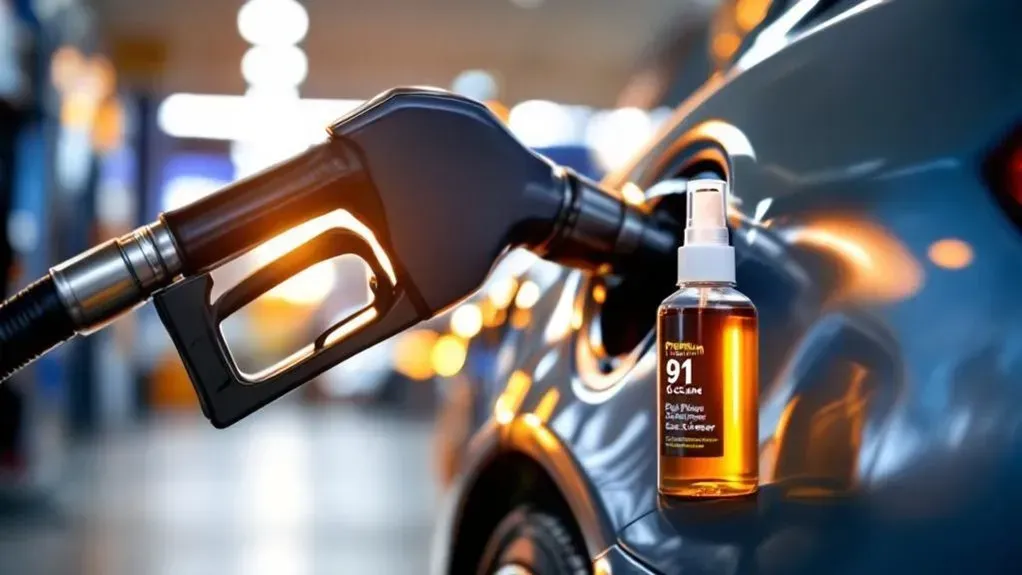
Use High-Quality Fuel and Consider Fuel Additives

While many drivers overlook fuel quality’s impact on emissions, choosing premium gasoline can greatly improve your vehicle’s smog test performance.
Higher-octane fuel burns cleaner and reduces harmful emissions that smog tests measure. You’ll see better results when you fill up with top-tier gasoline from reputable stations rather than bargain brands.
Consider adding fuel system cleaners or catalytic converter cleaners to your tank before testing.
These additives remove carbon deposits from fuel injectors, valves, and exhaust components. Run your car for 100-200 miles after adding cleaners to verify they circulate properly throughout your engine’s fuel system.
Check Your Vehicle's Fluid Levels
Although proper fluid levels might seem unrelated to emissions testing, maintaining them directly affects your vehicle’s ability to pass smog inspections.
Low or contaminated fluids can cause your engine to run inefficiently, increasing harmful emissions.
Before your inspection, check these essential fluids:
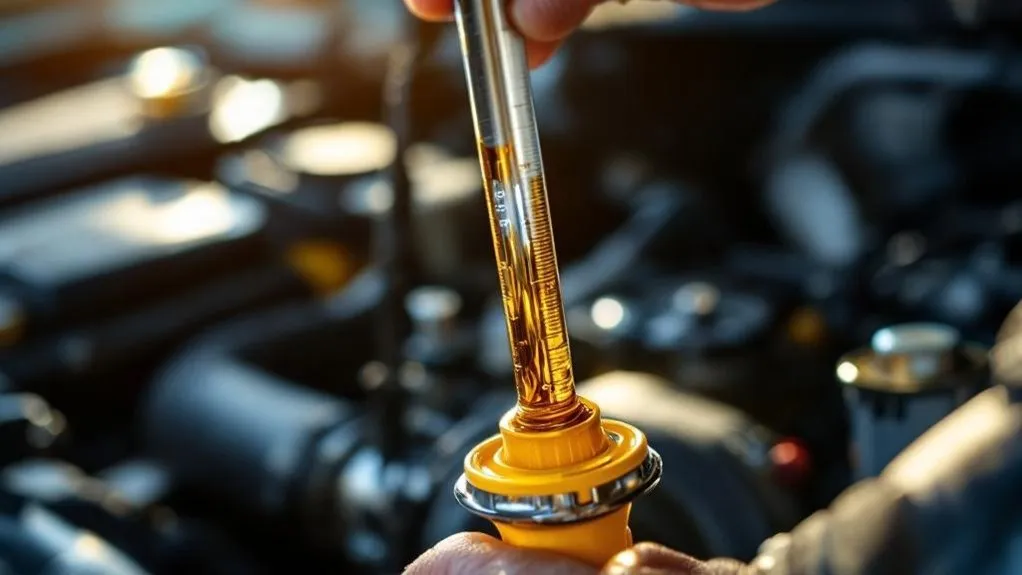
- Engine oil – Change dirty oil and replace the filter to guarantee peak engine performance
- Coolant – Maintain proper levels to prevent overheating that can damage emission control components
- Transmission fluid – Keep levels adequate to avoid strain on your engine during the testing process
Fresh fluids help your engine operate at peak efficiency, reducing emissions output.
Schedule Your Test at the Right Time

Beyond preparing your vehicle mechanically, timing your smog inspection strategically can greatly impact your chances of passing.
Schedule your test when your car’s engine is warm but not overheated. Drive for 10-15 minutes before arriving to guarantee ideal operating temperature. Avoid testing immediately after long highway trips, as your engine may run too hot.
Don’t schedule during extreme weather conditions like heavy rain or excessive heat, which can affect emissions readings. Book appointments during weekdays when stations aren’t rushed.
If you’ve recently completed repairs, wait at least 100 miles of driving to allow your car’s computer systems to recalibrate properly.
Warm Up Your Engine Properly
How long should you warm up your engine before a smog test? You’ll want to drive for at least 15-20 minutes before arriving at the testing facility. This guarantees your engine reaches ideal operating temperature and your catalytic converter functions efficiently.
A properly warmed engine burns fuel more completely, reducing harmful emissions that could cause you to fail.
Here’s what you should do:
- Drive on both city streets and highways to cycle through different RPM ranges
- Avoid idling in your driveway, as this doesn’t effectively warm all engine components
- Time your arrival so you don’t wait long periods after warming up
Your engine performs best when it’s hot.
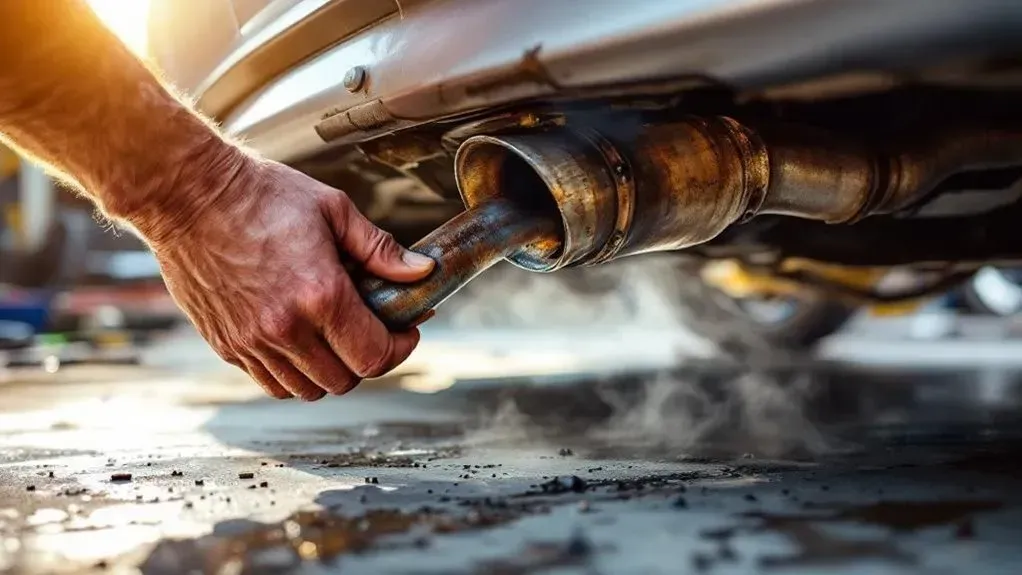
Address Any Obvious Exhaust Issues

Before you head to the smog inspection, take a few minutes to visually inspect your exhaust system for obvious problems that’ll guarantee failure.
Look for visible holes, cracks, or rust damage in your exhaust pipes and muffler. Check that your tailpipe isn’t hanging loose or dragging on the ground.
Listen for unusual sounds like rattling or loud rumbling that indicate internal damage. Black smoke from your tailpipe signals serious engine problems you’ll need to fix first.
If you spot any issues, get them repaired before scheduling your inspection. These obvious problems will cause automatic failure regardless of your emissions levels.
Keep Your Vehicle Registration and Insurance Current
While smog inspections focus on emissions testing, you can’t complete the process without proper documentation. Your vehicle registration and current insurance are mandatory requirements at most inspection stations.
Without these documents, you’ll be turned away regardless of your vehicle’s emissions performance.
Essential documentation includes:
- Valid vehicle registration – Must be current and match your vehicle’s VIN
- Proof of insurance – Current policy documentation showing active coverage
- Driver’s license – Valid ID matching the vehicle owner or authorized driver
Check these documents before heading to your appointment.
Expired paperwork means rescheduling your inspection and potentially missing registration deadlines.
Frequently Asked Questions
What Happens if My Vehicle Fails the Smog Inspection?
If your vehicle fails the smog inspection, you’ll receive a detailed report explaining which emissions standards weren’t met.
You’ll need to get the necessary repairs done at a certified auto shop to fix the issues causing the failure.
Once repairs are completed, you’ll have to return for a re-inspection.
You typically get a grace period to complete repairs and pass the test before facing penalties or registration problems.
How Much Does a Typical Smog Inspection Cost?
You’ll typically pay between $30-$60 for a smog inspection, depending on your location and the testing station you choose.
Prices vary by state and local regulations, with some areas charging more due to stricter emissions standards. You might find slightly lower rates at independent shops compared to dealerships.
Don’t forget you’ll need to pay additional fees if your vehicle fails and requires repairs before retesting.
How Often Do I Need to Get a Smog Inspection?
You’ll need to get a smog inspection based on your state’s requirements, which vary considerably.
Most states require inspections every two years for vehicles over a certain age, typically 4-6 years old. Some states need annual checks, while others don’t require smog testing at all.
You’ll also need an inspection when you’re selling your vehicle or registering it in a new state that requires emissions testing.
Can I Get a Smog Inspection at Any Certified Station?
Yes, you can get a smog inspection at any state-certified smog check station.
You’re not restricted to a specific location or required to use the same station each time. However, you’ll want to verify that the station is properly licensed and authorized to perform smog tests in your state.
Some stations specialize in different vehicle types, so if you’ve got a diesel or older car, you might need to find one that handles your specific vehicle requirements.
What Documents Do I Need to Bring for the Inspection?
You’ll need to bring your vehicle registration, current insurance proof, and a valid driver’s license for the smog inspection.
Make sure your registration isn’t expired, as stations won’t perform the test without current documentation.
If you’re selling your vehicle, you’ll also need the pink slip or title.
Some stations might accept digital copies of insurance on your phone, but it’s safer to bring printed copies of all required documents.